Poly in the city: an honest education with Connie Collins

Living in a big city, the dating pool can feel endless—filled with infinite possibilities, and infinite complexities. And while we’ve opened ourselves up to the beauty and freedom of polyamory, ethical non-monogamy, and fluid relationship styles, it’s OK to find navigating that a little overwhelming. Put those two things together, and exploring polyamory in a metropolis might feel like you need your own personal guide to answer all of your questions
You’re in the right place. We sat down and spoke with award-winning sex educator and writer Connie Collins about just that.
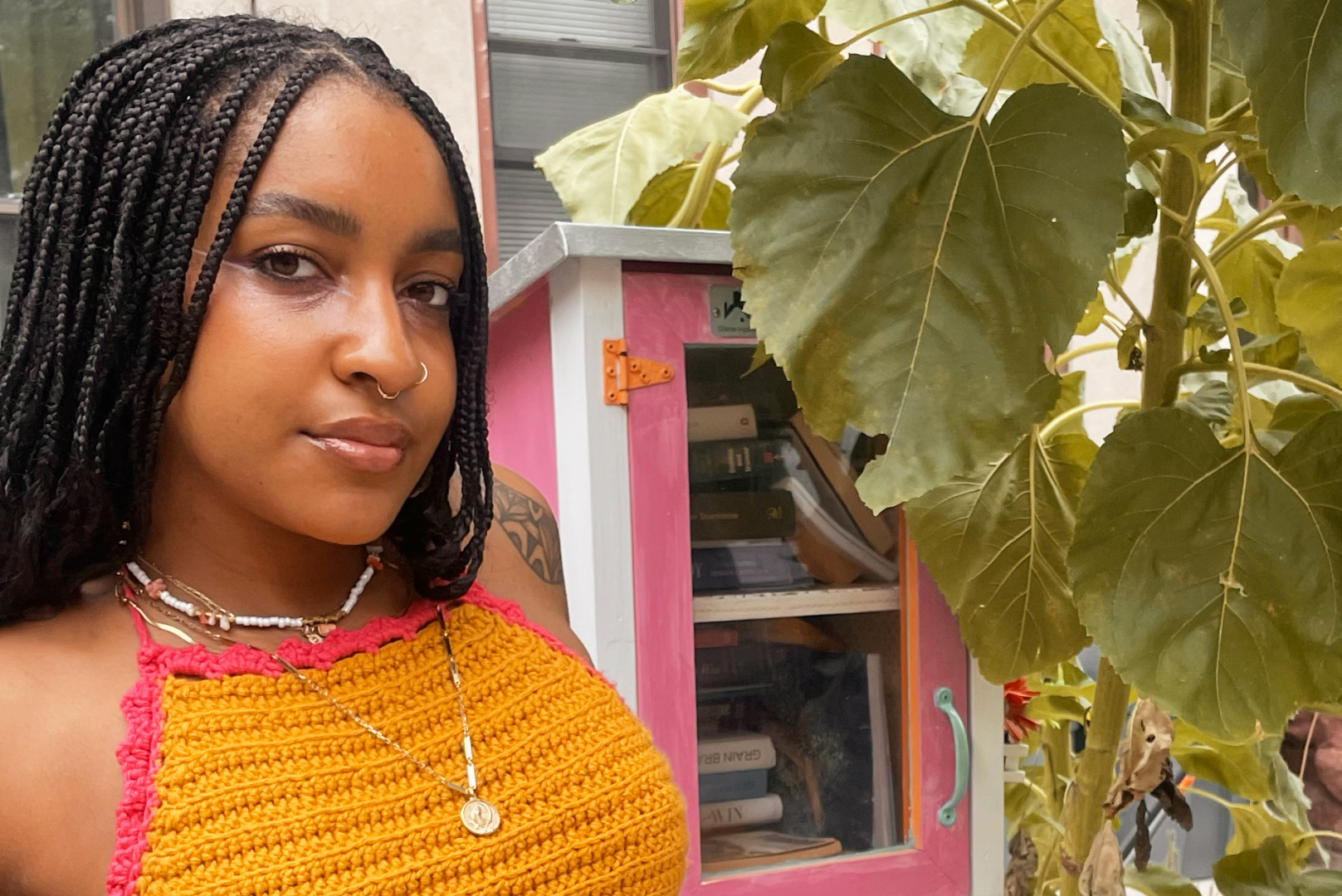
I came across Connie’s Instagram page “the first date diaries” as I was entering my new ethically non-monogamous partnership. She felt like a guiding light in a sea of polyamorous content creators and voices that were predominantly white. In our talk, we discussed everything from jealousy to boundaries and relationship ecosystems. Join Connie and I on the path to polysatisfaction.
Jard
I’ve been following your “first dates diaries” page for a while and it’s so enlightening. As a sex educator what would you say are the most common misconceptions about polyamory?
Connie
I’d say something I see come up often is that people associate polyamory with dating casually. That's not true, and it's typically just a conflation between preferred relationship style versus the level of commitment that you're looking for in a relationship. I get that the most often when I go out on dates with people, or when I talk to people about it, they're like “oh, so you're just looking for a casual connection?” And I'm like, “no, that's not what it is. I'm dating seriously right now and I'm polyamorous, and you can be dating seriously or casually monogamously as well.”
I think that's where people get confused. For monogamous people dating casually, the inherent difference is that you're not in love with any of those people, you're not looking to cultivate each and every one of those relationships or sustain them into something that's more long-term.
The other common misconception is that polyamorous people are “greedy” sluts. There's nothing wrong with being a slut, but I don't think that we're greedy by any means. I think a lot of polyamorous people are very intentional about considering their capacity for holding multiple relationships.
Jard
What does polyamory mean to you? How would you define it?
Connie
For me, polyamory is a subset of ethical non-monogamous relationships where a person feels they have the capacity to love multiple people and the ability to nurture and sustain multiple relationships at the same time. I do think there are some people who feel as though they can be in love with multiple people, but they're not able to actually sustain more than one relationship. They might be less polyamorous, and more on the monogamous to monogamish spectrum.
Jard
What have you learned about yourself through polyamory?
Connie
I've definitely learned I have a lot of love to give and that I'm not really a jealous person. But, you don't have to be inherently not jealous to be polyamorous. I think jealousy is a natural emotion we all go through. Just because you're feeling jealous, it doesn't mean you have an inherent issue with your partner dating other people. Maybe you're worried about the amount of time your partner is spending with other people, and that it might take away from the amount of time they're spending with you. You might be nervous that they're sharing things with other partners that they're not sharing with you. For me, I've always loved hearing about who my partners are dating and their past partners. I just love to hear them be happy. I guess I’ve experienced a lot of what people call compersion.
I've noticed that a lot of my insecurities or core wounds are really just around feeling chosen. I think the beautiful part about polyamory is that it does force you to really consider, OK, where do I fit on the dating spectrum? How do I want to date? What are my values in a partner? What do I think about myself? I know I’m worthy of love, care, [and] being in a long-term committed relationship. I just want to know that someone wants me, wants to continue to know me deeply, and is interested in supporting me in my passions, dreams, and ambitions. Being polyamorous has clarified the things I need in dating.
Jard
You mentioned that sometimes jealousy is rooted in these core wounds and insecurities. Something that comes up often is the lack of exclusivity. How do you maintain and build that intimacy when you’re not exclusive?
Connie
A lot of people who talk about non-monogamy refer back to the concept of friendships, because people feel like having multiple deep friendships is important in their lives. How do you maintain that level of connection and deep intimacy with multiple people at the same time? It's just about making time for them and understanding what their love languages are. I don’t think you can be non-monogamous without knowing how to communicate.
I’d also say become a master at Google Calendar. If plans need to change then communicate that… and have honest conversations with your partner about, “what do you need to feel loved?” and “how do you feel most loved?”
Jard
A lot of polyamorous spaces can be very white. How's your experience been as a Black femme in these communities?
Connie
I don't necessarily have a poly community. Quite a few people I know are polyamorous, but I also have really close monogamous friends. I will say that I don't currently have any close polyamorous friends of color. I feel like the idea of monogamy is far more important to Black and brown communities due to our history of fragmented kinship, like not being able to marry other people in the antebellum south or keep your family together.
So I think the idea is that in monogamy, we stay together in hard times 'cause my parents did that. I do believe they love each other, but they violated some values that they instilled in me in terms of how you should conduct yourself with a partner. I had to witness that, and I questioned “why are you all still together?” One of the things my father said to me is, “how would I look as a man if I left?” Polyamory was a term I didn’t even know before being a gender and sexuality studies major. We don't have typical access to that language, which is such a part of [a] more white affluent culture. I feel like online you'll see far more white content creators talking about polyamory than Black ones for sure.
Jard
Have you had these conversations with your family? What does that look like?
Connie
I was dating someone recently, the first woman I ever dated. My parents already knew that I’m queer and interested in women, but it wasn't really material to them until I got into a relationship with her. My mom was hung up on that, and my dad was more hung up on the polyamory thing 'cause he wants me to find a man, get married and have kids. But that's not how I want my life to look. I think it's them being like, “I just don't understand this, this doesn't make any sense to me.” Because they don't understand, they don't register it and then we end up having these cyclical conversations where I have to bring up that I'm polyamorous again because they just kind of forget, or think “she's gonna do what we want her to do anyway,” which is be monogamous, get married, and have kids.
It’s frustrating that my father has such staunch beliefs about how women and men are supposed to act in relationship to each other. He believes men are supposed to be the providers and breadwinners, whilst women are supposed to be submissive, take care of the home and kids. It's just a long drawn out thing.
Jard
In terms of language around partnership, what would you say is the difference between a primary partner and an anchor partner?
Connie
To me, this is in reference to hierarchical polyamory, with the primary partner as your primary focus. They are the closest person to you, emotionally, financially, and in terms of how you're spending your time and sharing your life. Then, there’s a ranking of partners after that… Anchor partners are really just supposed to describe the level of emotional closeness and openness you have with another person. You might have several anchor partners.
In a lot of ways, having an anchor partner does seem similar to the idea around primary partners, but without the understanding that your anchor partner is the “main relationship.” I think [the idea of] an anchor partner implies more fluidity, and [refers to an understanding] that relationships are in movement and flux.
Jard
Let's talk about the big thing: boundaries. How do we establish boundaries in our relationships?
Connie
I think boundaries are just for our personhood—in terms of how we take care of ourselves and protect our energy. We have boundaries around our time, the amount of emotional labor that we can put into things, around our finances, around sex. As soon as I meet people, I really do try to ask them, “Are you in any partnerships right now? What are your boundaries and relationship agreements if you have them? What are the boundaries that you have for yourself?” Those things are really important to hear, but people aren't often used to talking about them.
Bringing them up as casually as possible is really productive. Because I think people hear the term “boundaries” and they're like, “oh my God, this is a huge conversation and it's so heavy, it's gonna be make or break for my relationship.” But boundaries aren’t born out of a place of fear, but just knowing that certain things aren’t gonna be healthy for me. I'm not gonna be in a positive relationship with myself, my body, and my mind.
Jard
If you're in a structure with multiple partners, how do you continue to cultivate your relationship with yourself, and give yourself that care and attention?
Connie
I think this is why it's also important to take a page out of solo polyamory’s book, in being able to understand your relationship with yourself as a relationship that you have in your life. And so for me that means making sure I'm honest with my partners when I need some solo time.
Even if you like to be around people all the time, if you're not spending any time alone, it can feel hard to assess how you’re genuinely feeling, because you're being so impacted by the emotions of others. I don't think anybody should be super codependent in their relationships insofar as to not survive without their partner. I think relationships are supposed to be external things that are adding to our fire—they shouldn’t cancel out or replace the life you've generated for yourself.
Jard
I'm wondering, can you tell when you're polysaturated or polysatisfied? What’s the difference?
Connie
Polysaturated is the term people usually use to say, “I'm at the limit of where I can be with my relationships.” I find that many people end up identifying [with a state of] polysaturation when they are already overextended. I think it's important to have another term like polysatisfied, which is to identify more of a state of equilibrium in polyamorous or non-monogamous relationships. I'm not overextended. Polysatisfaction means you’re in a really good place, all of your needs are being met, and you have a good relationship ecosystem.
Jard
How do you maintain a good relationship ecosystem?
Connie
Well, this is gonna look different for everybody. I'm more into kitchen table polyamory. I like everybody to be aware of each other. I'm not saying people need to be best friends and, to be honest, I'm not really interested in polycules. I want kitchen table polyamory in the sense that, if my partners and my partner's partners were all at a birthday party, no one's throwing hands.
For me, I like the idea of comfortably talking about your partner's experiences with their partners, and your experiences with yours. I'm not talking about the play-by-play, like how they were kissing and how they fucked, but simple questions like, “how was your day?” or “did you have a good time?” I also believe in frequent and regular check-ins—making it normal to have a contained space to bring up the goings on in your relationship, so it doesn't have to be a fight if things are going wrong.
Jard
How do you navigate dating people with different relationship structures, or do you only date poly people?
Connie
I mentioned this in a Story once, and somebody got back to me saying they’d been in a relationship with a monogamous person as a polyamorous person. It worked because their partner was monogamous and didn’t want to date multiple people, but was comfortable and super cool with their partner doing so.
In terms of someone being open and only interested in having sexual relationships with people outside their primary partnership, could they be with someone who’s polyamorous and looking to make deeper connections? From what I’ve seen on the internet, people can have a hard time using terminology. I don’t use terms to be super rigid or structured. I just think they help us have these conversations. If you don't have [the] language to talk about the differences between polyamory, monogamy, open relationships, [and] relationship anarchy then these conversations can become difficult.
Jard
What are your dating tips for being poly in a big city?
Connie
Being in a big city where a lot of people use dating apps, there’s this illusion of infinite choice and possibilities. I think people need to take more time to genuinely sit with other people to learn about them and get curious—but sometimes we abandon things if we don't feel an immediate spark. Or, if we do feel an immediate spark, it gets really hot and then burns out. I think this also coincides with people not reading books as much anymore, because we cannot sit with our own boredom.
The second thing would be to go out and get a life. I know I'm the type of person who can self-isolate pretty easily, especially when I'm depressed. Put yourself in positions where you can meet new people and push through the discomfort of talking to them. You will strike out sometimes. It happens, but you're not going to connect with anybody if you're not going up to anybody.
Jard
Who is your biggest poly icon?
Connie
My biggest poly icon. That's great. Probably my friend Kaylin, she's in the most beautiful marriage with her partner of many years and just got into a relationship with her new boyfriend. She's possibly one of the most steady people I've ever met. The way that she approaches relationships is so heart-forward and genuine, with an eye toward basic care. Also, shoutout to all the polyamorous content creators on the internet. I really do love Polyampoppy, Polyphilia and Decolonizing Love, they're great too.
If you’re ready to explore your identity and desires, and to connect with others who truly understand, you can find what’s waiting for you on Feeld. For more, dig deeper into curiosity, intimacy, and self-expression in Issue 2 of AFM, Feeld’s magazine.